
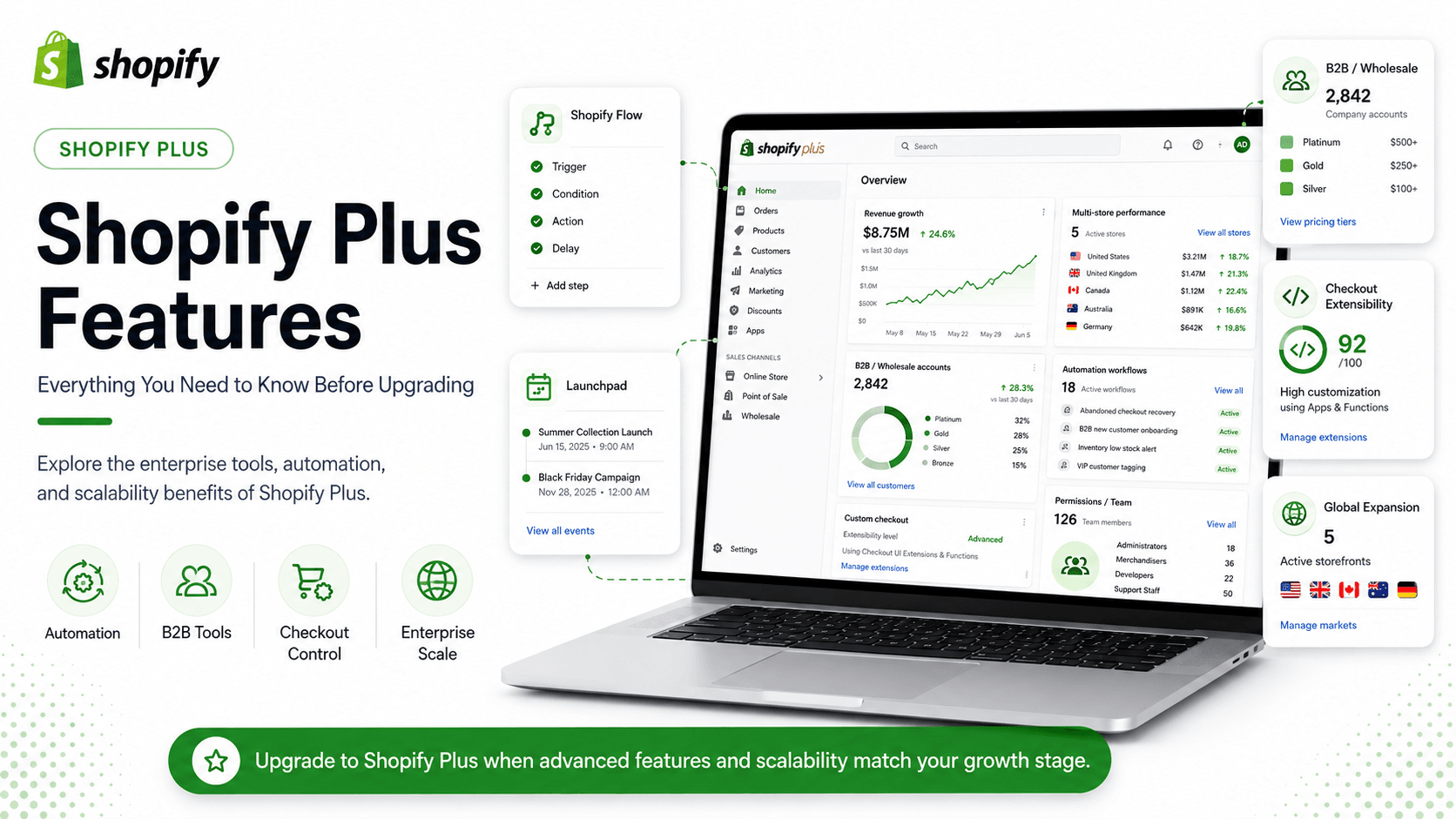
Shopify Plus is Shopify’s enterprise plan for brands that have outgrown standard plan limits or need advanced automation, checkout control, and operational scale. Before upgrading in 2026, understand which features create real leverage for your business — and which are nice-to-have.
Who Shopify Plus is for
Plus usually makes sense for high-volume merchants, complex B2B operations, multi-brand setups, or teams that need deeper checkout and automation control. If your bottlenecks are theme design or basic marketing, Plus alone will not fix them. Upgrade when platform constraints are blocking growth.
Checkout extensibility and conversion control
One of the strongest Plus advantages is greater checkout customization potential. Brands can tailor upsells, branding, and checkout logic more carefully than on lower plans. Because checkout is where revenue is won or lost, this can justify the upgrade when standard checkout limits hold you back.
Shopify Flow and automation
Automation reduces manual operations: tagging customers, routing orders, triggering internal alerts, and supporting exception handling. Flow becomes more valuable as order volume and team complexity grow. Map your repetitive tasks before upgrading so you know what automation should pay for.
B2B and wholesale capabilities
Plus supports more serious B2B use cases with company accounts, catalogs, and wholesale-oriented workflows depending on setup. If wholesale is a major revenue channel, evaluate whether Plus features reduce custom work and support better buyer experiences than app-only solutions.
Shopify Functions and advanced logic
Functions allow more precise customizations around discounts, payment, and delivery logic. This matters when promotional rules or operational rules become too complex for scripts and apps. Advanced logic should be designed carefully to remain maintainable.
Operational and support benefits
Plus merchants often receive stronger launch and support resources, higher API limits, and expansion tooling for international or multi-store operations. These benefits matter most when your team ships changes frequently and cannot afford platform bottlenecks.
When not to upgrade yet
If conversion rate is low because product pages are weak, or if speed issues come from too many apps, fix those first. Plus is not a substitute for merchandising discipline, SEO foundations, or clean theme architecture.
A practical upgrade checklist for 2026
Document current plan limitations, estimate revenue impact of checkout and automation improvements, review B2B requirements, and calculate total cost against expected operational savings. Then pilot the highest-value Plus features with a clear success metric.
XLOXI helps brands assess Shopify Plus readiness and implement the theme, checkout, and automation work that makes an upgrade worthwhile.
Implementation priorities after upgrading
Do not turn on every Plus capability at once. Start with the bottlenecks that justified the upgrade: checkout improvements, automation of high-volume ops tasks, or B2B account experiences. Assign owners and success metrics for each initiative so the higher plan fee maps to measurable outcomes.
Coordinate theme, apps, and development work carefully. Plus features still depend on clean storefront foundations. A slow theme or messy product data will limit the value of advanced checkout and automation.
Re-evaluate annually. Business complexity changes, and so should your Plus roadmap. The brands that get ROI from Plus in 2026 treat it as an operating system upgrade with a backlog, not a status badge.